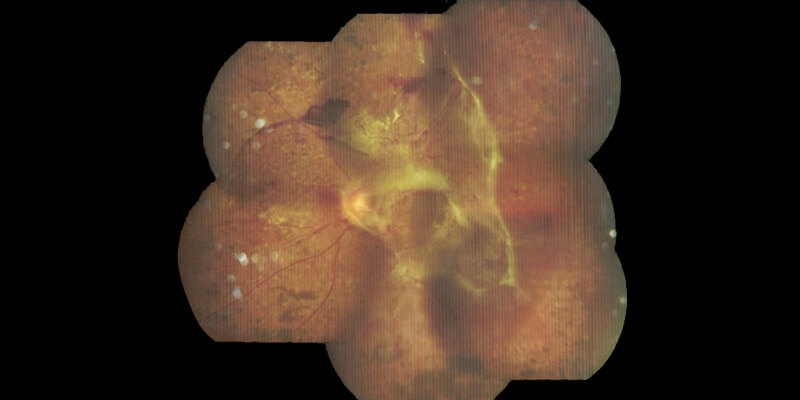
Geographic Atrophy is the late stage of dry age-related macular degeneration (AMD), which leads to a slow process of retinal degeneration, ultimately causing irreversible central vision loss. This happens because of the gradual breakdown of cells and supporting tissues of the macula. Due to the fact that the disease progresses slowly and does not show any symptoms, it can go unnoticed by many seniors.
Understanding geographic atrophy, symptoms, causes, and existing treatments for this disease will be helpful in detecting vision changes and undergoing an ophthalmic examination. This article provides information on the consequences of the disease on vision, diagnosis, and possible treatment of this condition.
What Is Geographic Atrophy in the Eyes?
Geographic Atrophy is the more advanced stage of dry age-related macular degeneration. This condition is characterised by progressive death of cells within the retina, especially within the macula, which is the center of the retina.
The macula assists people in conducting tasks like reading, recognising people’s faces, driving and object identification. When the light-sensitive cells in the macula and their associated structures get impaired, central vision can slowly begin to deteriorate.
It is described as having regions of retinal tissue loss which could be expanding. The regions could, in some cases, affect the fovea, which is the area in charge of sharp vision.
Geographic Atrophy is regarded as a type of advanced stage of dry AMD. Though it may involve one eye or both eyes, it varies from person to person.
Why It Is Called the “Silent Stage”?
Geographic atrophy is called a silent stage of vision impairment since early retinal changes can occur without any symptoms.
Unlike conditions that lead to visual disturbance, this eye disorder may develop slowly. Patients may keep going about their daily routines without noticing any change in their central vision.
Several factors contribute to this delayed recognition:
- Progression: The cells in the retina wear away gradually instead of instantly affecting one’s vision.
- Compensation through the other eye: The unaffected eye can take on the duties of the affected eye to some extent.
- Site of Retinal Injury: The early damaged regions may occur in locations other than the fovea, resulting in preserved central vision.
- Small vision changes: Problems reading small print and trouble seeing when light levels are low can often be explained by aging.
It is important to note that “Silent Stage” is just a descriptive term and not a distinct medical stage. Geographical Atrophy is an advanced form of Dry Age-Related Macular Degeneration, regardless of the absence of obvious symptoms.
What Are the Symptoms of Geographic Atrophy?
The symptoms of Geographic Atrophy depend on the location, size, and progression of
Retina damage.
While some people may not show many symptoms at first, other people’s symptoms slowly get in the way of daily living activities.
Common symptoms include:
- Central Vision Loss: If the macula is damaged, then it will cause problems when seeing things in front of the eyes.
- Reading difficulty: The letters can seem to be missing, fuzzy, or hard to see.
- Problems identifying faces: Central vision can be damaged, impairing the ability to discern facial features.
- Poor night vision: There are some people who suffer from poor visual abilities in dimly lit areas.
- Colour reduction: The perception of colours will be diminished.
Areas of loss of vision can be present in the central or close to central visual fields.
Such symptoms may be common to various disorders of the retina. An eye examination is required to find out the exact cause.
What Causes Geographic Atrophy in Older Adults?
The precise aetiology of Geographic Atrophy remains unknown. Nonetheless, it is related to progressive changes in the retina that take place in age-related macular degeneration.
The macula has some significant components such as photoreceptors and retinal pigment epithelium (RPE). RPE assists in the survival of photoreceptors.
As age advances and AMD-related issues occur, certain mechanisms could be involved in retinal damage:
- Development of drusen: There may be deposits of cellular waste products below the retina.
- Stress to cells: The oxidative stress could cause damage related to retinal cells.
- Inflammation: There may be alterations in the complement system of the immune system with respect to AMD.
- Degeneration of retinal cells: There could be progressive degeneration of the RPE and photoreceptors leading to retinal atrophy.
With these affected regions increasing in size, they could cause difficulty in the macula in processing visual input.
What Are the Risk Factors for Geographic Atrophy?
Several conditions can potentially raise the chances of having Geographic Atrophy.
- Age: The possibility of getting age-related macular degeneration increases with age especially beyond the age of 60.
- Family history: Having first-degree relatives with AMD can potentially make someone susceptible to it.
- Smoking: Exposure to cigarette smoke is a proven modifiable risk factor for AMD.
- Dry AMD: Persons suffering from dry AMD are at risk of developing Geographic Atrophy.
- Genetics: Some genetic differences have been linked to AMD susceptibility.
- Lifestyle: Unhealthy lifestyles such as poor dietary habits and cardiovascular risk factors can contribute to AMD susceptibility.
Having any of the above risk factors does not guarantee that one will definitely get Geographic Atrophy. Eye examinations are necessary for persons who have AMD or have a history of the condition.
How Is Geographic Atrophy Diagnosed?
An early diagnosis aids in detecting retinal changes and determining the severity of damage. An ophthalmologist or retina specialist can suggest some investigative procedures.
- Dilated eye exam: The pupils will be dilated by the use of eye drops in order to facilitate an examination of the retina and macula.
- Optical Coherence Tomography (OCT): Non-invasive procedure that enables taking cross-sectional images of the retina and helps detect areas of thinning.
- Fundus autofluorescence (FAF): Imaging procedure that helps detect changes in retinal pigment epithelium and determine the extent of atrophy.
- Fundus photography: Pictures of the retina help to document any changes that occur over time.
- Tests for visual acuity and visual field: Central vision and areas with reduced visual functioning are evaluated.
The use of clinical examinations together with imaging of the retina can help determine the severity of Geographic Atrophy.
Current Treatment Landscape
Presently, there is no cure for Geographic Atrophy or for retinal cells that have been lost to this condition. But there have been developments in this area, and some treatments might prove useful in preventing further retinal deterioration.
Complement Inhibitor Injections
There are two approved medications used to inhibit the complement pathway for the treatment of Geographic Atrophy:
Pegcetacoplan: It is a drug which works on complement C3, a protein which causes inflammation of the retina.
Avacincaptad pegol: It is a drug which works on complement C5 of the complement pathway.
The administration of both drugs is done via injections in the eye at certain intervals decided by the doctor.
Both have shown their effectiveness in clinical trials and can help slow the growth of geographic atrophy lesions. But neither can reverse the already dead retina nor improve vision.
Possible side effects of such therapy may be inflammation in the eye, infections, increased pressure in the eye, and formation of wet AMD.
Approval and availability depend on the specific country. Patients are advised to speak to their retina specialist about treatment options in their area.
Monitoring and Follow-Up
Regular retinal exams aid in monitoring the developments in the affected parts. Techniques like Optical Coherence Tomography (OCT) and Fundus Autofluorescence Imaging may be used for such assessments.
Low-Vision Rehabilitation
When central vision becomes affected, low-vision rehabilitation may help individuals maintain independence.
Depending on their needs, patients may benefit from:
- Magnifying devices
- Specialised reading aids
- Improved lighting
- Electronic screen magnification
- Visual rehabilitation training
Lifestyle and Risk Management
Certain lifestyle measures may support overall retinal health:
- Avoid smoking and tobacco exposure.
- Maintain a balanced diet containing leafy green vegetables and other nutrient-rich foods.
- Manage blood pressure and cholesterol.
- Maintain regular physical activity.
- Attend recommended ophthalmic follow-up appointments.
AREDS2 nutritional supplements can be considered for people with certain types of AMD, including intermediate AMD or particular forms of AMD in one eye. However, they are not a clinically proven remedy to reverse or prevent Geographic Atrophy from developing.
Conclusion
Geographic Atrophy is a more severe case of dry macular degeneration that might lead to gradual loss of vision. The fact that the retina is affected before any symptoms are visible makes understanding this disease and regular check up with retina specialist is essential for prevention necessary for people at risk.
Thanks to modern technologies in the field of retinal imaging and complement inhibitors, several macular degeneration treatment options are available today. While there is no cure for retinal damage caused by this disease, some treatments may stop its progression in eligible patients.
With the help of Neoretina, people can get educated about different kinds of retinal diseases, including Geographic Atrophy.
FAQ’s

- Geographic Atrophy: The Silent Stage of Vision Loss Many Seniors Don’t Know About - November 19, 2026
- Can Low Vitamin B12 Affect Your Eyes? Signs You Should Know - November 19, 2026
- Common Winter Eye Problems & How To Treat Them - October 27, 2026