Blog

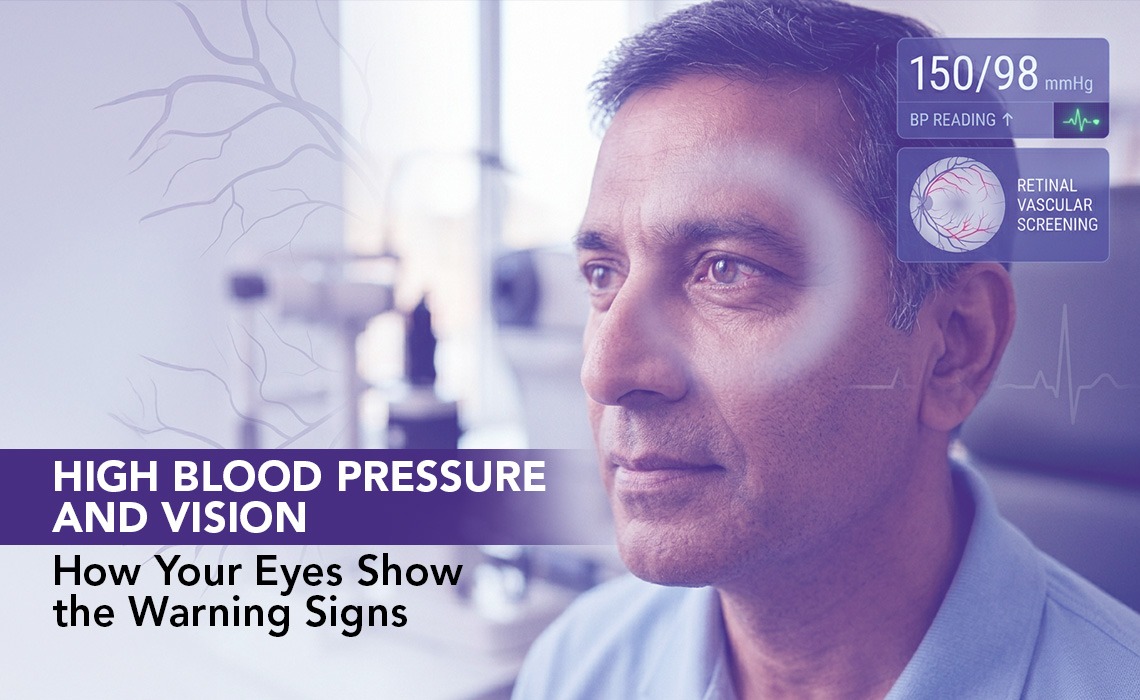
  • High Blood Pressure and Vision: How Your Eyes Show the Warning Signs

    High Blood Pressure and Vision: How Your Eyes Show the Warning Signs

    Hypertension is called the “silent killer” because, at the time of onset, there are no visible signs. Despite the common belief that hypertension can be related only to heart diseases and stroke, the effect of this disease on eyesight should not be underestimated.

    It should also be noted that the link between high blood pressure and vision is much closer than people think. In fact, high blood pressure leads to blood vessel complications in one’s eye, resulting in issues like blurred vision, bleeding, inflammation, and even blindness in some cases.

    Understanding how high blood pressure influences your eyesight can help you take quick action to protect yourself from both.

    Understanding the Relationship Between Blood Pressure and Eyesight

    There are very small blood vessels in the eyes that serve to transport oxygen and nutrients to the retina and the optic nerve. However, due to the continuous presence of high blood pressure, such vessels can become narrow and weakened.

    This problem occurs due to hypertension retinopathy, whereby the retina, which is the sensitive part located at the back of the eye, suffers from increased blood pressure.

    The effects of blood pressure on the eyes may depend on:

    • Degree of the hypertension
    • Length of time the blood pressure remains high
    • Other health conditions such as diabetes and cholesterol
    • Age and life style

    In most situations, damage of the eyes occurs slowly without any symptoms, hence the need for screening.

    Definition of Hypertensive Retinopathy

    Hypertensive retinopathy is an eye disease caused by damage to blood vessels in the retina resulting from elevated blood pressure. The condition causes the occurrence of damage to blood vessels when there is an elevation of the patient’s blood pressure.

    Some of the symptoms observed by ophthalmologists include:

    • Narrowed blood vessels
    • Swelling of the retina
    • Bleeding of the eyes
    • Cotton wool spots
    • Swelling of the optic disc (in severe cases)

    The disease progresses according to the control of the patient’s blood pressure level.

    What Happens to Your Eyes When Blood Pressure Is Too High?

    However, when high blood pressure remains uncontrolled, it turns into a problem that affects the blood supply to the entire body, including the eyes.

    Common problems that can arise in the eyes are:

    1. Vision Complications

    Vision problems or distorted vision can occur due to excess water buildup or reduced blood circulation in the retina.

    1. Eyestrain and Headaches

    Headaches and eyestrain can be triggered by having high blood pressure.

    1. Retinal Haemorrhage

    This happens when blood seeps out of the ruptured veins and finds its way into the retina.

    1. Optic Nerve Injury

    This happens in cases of very high blood pressure, which affects the blood flow to the optic nerve, causing blindness.

    1. Double Vision

    Double vision is yet another problem reported by people suffering from hypertension.

    1. Fluctuation of Vision

    In some instances, uncontrolled hypertension leads to fluctuation of vision because of the problems with the blood flow.

    Signs of Hypertension Eye Diseases

    It is often difficult for many individuals with hypertension to notice any signs before the eyes have been heavily damaged. However, here are some symptoms that will help you understand whether you have a problem.

    • Blurring of vision
    • Red eyes
    • Headaches
    • Double vision
    • Bad vision during nighttime
    • Seeing spots before the eyes
    • Temporary blindness
    • Pain in the eyes (in severe cases only)

    In case of sudden vision changes, one should immediately consult a physician.

    Could Hypertension Lead to Vision Problems?

    Yes, because hypertension that remains untreated could cause hypertension-related vision problems due to severe injury to blood vessels that supply the retina and optic nerves.

    Examples of such complications include:

    Retinal Vein Occlusion

    Injury to veins can result in vision problems.

    Optic Neuropathy

    Insufficient blood flow damages the optic nerve.

    Choroidopathy

    Fluid in the space under the retina causes problems with vision.

    Vision Loss Caused by Stroke

    High blood pressure can lead to stroke and cause vision problems. Early intervention greatly reduces the likelihood of complications.

    Is Vision Loss Due to Hypertension Always Permanent?

    No, not always. The good news is that in most cases, when the problem is detected early enough, the vision can be restored if the issue is dealt with successfully.

    However, several factors influence the likelihood of restoring your eyesight, including:

    • Detection stage
    • Degree of retinal damage
    • General health
    • Rate of blood pressure reduction

    This is why medical check-ups are crucial.

    Will Blurred Vision Resolve With a Reduction in Blood Pressure?

    Blurred vision as a result of swelling or any circulation problem may clear once blood pressure is normalised. Nevertheless, once there is damage to retina tissue or optic nerve due to high blood pressure, it may not be resolved.

    The patient is advised to:

    • Take drugs as directed
    • Check blood pressure consistently
    • Undertake regular eye tests
    • Adhere to healthy practices

    The Importance of Hypertension Screening Eye Tests

    Hypertension screening eye tests aid in the detection of symptoms of hypertension via examination of the retina. Blood vessel abnormalities in the eyes that signify an existence of uncontrolled hypertension even before any symptoms occur.

    Such tests become critical for:

    • Persons aged over 40 years
    • Individuals suffering from diabetes
    • Smokers
    • Individuals with hypertensive history in their family
    • People having blurred vision or headaches

    Eye Injury Risks Due to Hypertension

    Several risk factors make one more vulnerable to the adverse effects on the eyes caused by high blood pressure:

    • Cigarette smoking
    • Diabetes
    • Obesity
    • High cholesterol levels
    • Inactivity
    • Stress
    • High intake of salt
    • Medication non-compliance

    Handling these risks ensures the optimal functioning of the heart and eyes.

    How to Protect Your Eyesight If You Are a Hypertensive Person?

    Blood Pressure Monitoring

    Ensure that your blood pressure remains in normal ranges.

    Have Frequent Eye Tests

    This can help diagnose hidden eye problems.

    Adopt a Healthy Eating Habit

    Eat more fruits, vegetables, whole grains, and low-sodium foods.

    Perform Physical Activities

    It increases blood flow throughout the body.

    Stop Smoking

    This habit aggravates damage to blood vessels.

    Handle Your Stress Levels

    Relieving stress helps promote your cardiovascular system.

    Follow the Instructions of Your Physician

    Avoid missing any medication for hypertension.

    Latest Advances in Eye Care for Hypertensive Patients

    The latest advancement in eye technology has made it easier for experts to diagnose retinal problems much sooner than before.

    Advancements in eye diagnostic technology include:

    • Digital retinal imaging 
    • Optical coherence tomography (OCT) scanning 
    • Fluorescein angiogram 
    • Retinal photography 

    This advancement ensures that any problems related to High Blood Pressure and vision can be prevented.

    When Do You Need to Visit an Eye Doctor?

    Visit an eye doctor right away when you have any of the following:

    • Blurred vision
    • Pain in your eye
    • Visual disturbances like flashes or floaters
    • Visual disturbances such as loss of vision
    • Headaches associated with visual symptoms

    Early intervention can help prevent further damage to your health and vision.

    Conclusion

    The connection between high blood pressure and vision underscores the significance of periodic health checkups and early detection. As a result, being able to diagnose hypertension symptoms through vision before other parts of the body display any signs, frequent eye exams have great significance for ensuring good vision and good health.

    Conditions such as hypertension-induced retinopathy, retinal haemorrhage, and injury to the optic nerve may lead to future problems if the problem is not detected early. However, when early detection is done for such conditions, combined with the proper maintenance of blood pressure levels, living healthily, and undergoing regular checkups, the condition can be prevented.

    At Neoretina, they offer specialised eye care services for comprehensive eye care and preventing vision-related problems.
    FAQ’s

    1. What does hypertensive retinopathy entail?

    Hypertensive retinopathy is the damaging of the vessels of the retina as a consequence of increased blood pressure.

    2. How will having high blood pressure affect my eyes?

    Having high blood pressure affects the eyes through vascular injury leading to impaired eyesight, hemorrhage, edema, and impairment of the optic nerve.

    3. Is vision loss caused by high blood pressure permanent?

    No, hypertension vision loss can be treated via diagnosis and control of high blood pressure levels; however, there are some instances that cannot be treated.

    4. Will having reduced blood pressure restore my blurred vision?

    Perhaps, vision loss will recover upon stabilising blood pressure levels; however, this depends on the extent of damage to the eyes.

    5. Why do patients with high blood pressure need eye examinations?

    Eye examination allows one to diagnose retinal changes that could develop further into complications due to elevated blood pressure levels.

  • Can the 20-20-20 Rule Protect Your Eyes from Digital Strain?

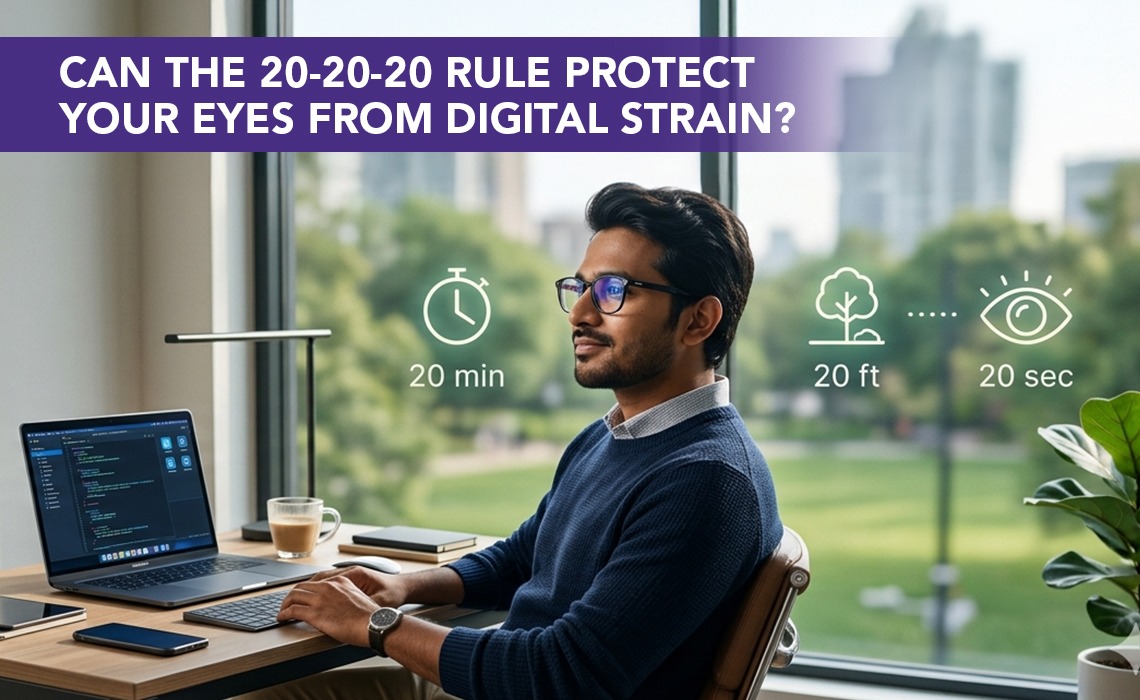
    Can the 20-20-20 Rule Protect Your Eyes from Digital Strain?

    Due to the creation of digital devices, including computers, smartphones, and tablets, individuals are utilising screens every single day. Many people believe that screens are highly necessary for daily activities because people need screens for work, education, social connection, and free time. Even though digital technology provides easy access and high productivity, a major difficulty known as digital eye strain is caused by using screens for a long time. It has been observed that digital eye strain brings tiredness and fatigue when screens are used without a break.

    During this modern period of digital technology, experts claim that people must practice the 20-20-20 eye care rule to protect their vision. By using this specific method, dry eye and eye strain are successfully reduced, which helps people who look at a screen for many hours. It has been observed that the 20-20-20 rule for eyes prevents digital eye strain because the rule gives the eyes a necessary rest.

    What Is the 20-20-20 Rule for Eyes?

    In order to safeguard one’s eyes when viewing electronic devices, the use of the 20-20-20 rule can be implemented. In fact, studies have shown that the eyes can get easily tired or strained after prolonged staring at screens.

    According to this rule, an individual has to look at an object that is positioned 20 feet away from him/her for 20 seconds every time he/she uses the screen for 20 minutes. It has often been noticed that doing this simple thing can help regain their vision focus.

    Regarding the necessity of 20 seconds, the human visual system needs to focus on near objects when a computer or digital device is operated for many hours. Many people believe that this close focus causes more eye strain because the eye muscles are working constantly. Therefore, the duration of 20 seconds is provided so that the eyes can receive a proper opportunity to rest.

    Following the 20-20-20 rule can help prevent a condition called digital eye strain.

    Know about Digital Eye Strain

    Digital eye strain refers to a visual condition that results from too much usage of electronic gadgets, including computers and smartphones.

    When someone spends a lot of time on digital devices in their day-to-day activities, there is a decrease in the blink rate, leading to dryness in the eyes. In addition to that, looking at a screen for a while can cause strain in the eye muscles by damaging them.

    Indications of digital eye strain are:

    • Dry eyes
    • Burning feeling
    • Blurred vision
    • Eye strain
    • Neck and shoulder pain
    • Sensitivity to light
    • Trouble focusing
    • Screen-induced headache

    The intensity of such indications tends to be directly proportional to the duration of use.

    Why Does Screen Time Cause Eye Problems?

    Vision demands extreme concentration when looking at a screen. Unlike reading printed text, digital screens have glare, flicker, differences in brightness, and tiny font sizes that demand more focus from the eyes, often leading to eye problems such as eye strain, dry eyes, blurred vision, headaches, and difficulty focusing.

    The main causes of digital eye strain can be attributed to:

    • Blinking less
    • Improper sitting position
    • Inadequate lighting
    • Glare on screens
    • Continuous screen viewing for long periods
    • Viewing the screen from shorter distances

    Often, many people do not pay attention to these concerns until the problems get worse.

    How Does the 20-20-20 Rule Help?

    The 20-20-20 rule helps rest your eyes by reducing pressure on your eyes.

    Advantages of the rule are as follows:

    • Relief from eye fatigue
    • Comfortable vision
    • Headache reduction
    • Increased ability to concentrate
    • Less dryness and irritation

    While the rule doesn’t necessarily help you avoid all forms of eye strain, it’s regarded as one of the easiest and most effective ways to do so.

    Blue Light and Eye Strain

    Modern gadgets emit blue light, which is a significant issue nowadays. Being exposed to screens continuously can cause blue light eye strain.

    Being exposed to blue light may cause:

    • Eye strain
    • Insomnia
    • Eye irritation
    • Screen discomfort

    Screen strain issues can be solved by turning on night mode, lowering the brightness level of the screen, and using the 20-20-20 exercise method for the eyes.

    Other Ways of Eye Care for People Using Computer Screens

    Other than adopting the 20-20-20 rule, there are other ways one can adopt to protect their eyes while using computers and other electronic screens are as follows.

    Keep Devices at Proper Distance

    One should ensure that the electronic devices are about an arm’s length away from their eyes.

    Match Device Brightness with Room Brightness

    The brightness of the screen must match the ambient level of the environment.

    Regular Blinking

    It is essential to blink frequently to keep the eyes lubricated.

    Improve Surrounding Light

    One should not have direct sunlight or any overhead lights falling on the screen.

    Use artificial eye lubricants if necessary

    Artificial lubricants are useful to alleviate dryness.

    Take Breaks

    It helps relax the eyes as well as the body after continuous work.

    Can Too Much Screen Time Damage Your Eyes?

    There is also fear that prolonged screen usage will lead to permanent eye damage. While staring at screens all day might not make one go blind, such activity causes irritation and exacerbates any other issues present.

    Prolonged screen usage may lead to:

    • Dry eyes
    • Headache from screen time
    • Eye fatigue
    • Insomnia
    • Low productivity

    It is even more hazardous when children start spending more and more time on such electrical and technological products for learning and fun.

    The Importance of Eye Care for Students and Professionals

    Among the many people who suffer from digital eye strain are students and office workers who spend long periods working on their laptops and cell phones.

    However, healthy behaviors, including:

    • Using the 20-20-20 principle
    • Practising good posture
    • Avoiding unneeded computer use
    • Making frequent breaks

    It is essential that parents educate their children to balance their time in front of screens with physical outdoor activities.

    When Should You See an Eye Doctor?

    Eye strain occasionally occurs, but it is important to seek medical attention for any constant eye strain symptoms.

    Visit an eye specialist when you encounter:

    • Constant blurred vision
    • Severe headache
    • Continuous dry eyes
    • Blurred vision
    • Difficulties focusing
    • Eye pain

    Routine eye examinations help identify any vision problems.

    Why Does Digital Eye Awareness Matter?

    As technology increases in people’s lives, emphasis on eye health is becoming a vital factor. Many people spend over 8-10 hours per day working with electronics but do not take sufficient visual breaks.

    Simple ways that can be adopted for healthy vision include the use of 20-20-20 rule for eyes.

    It is crucial to improve digital eye health awareness at school, workplace, and even homes.

    Conclusion

    Eye care has become even more important in light of digital technology advancements. Eye care, including adopting the eye care method of following the 20-20-20 rule, is an ideal way that one can consider as a measure to avoid digital eye strain. When joined with proper lighting, correct screen time management, sufficient eye rests and regular eye check-ups, it will work wonders in ensuring healthy eyes from constant exposure to electronic devices. There is a need to raise awareness about eye care when it comes to usage of electronic gadgets, both among children and adults, according to Neoretina.

    FAQ’s

    1.What is digital eye strain?

    Digital eye strain involves eye discomfort resulting from over-use of digital devices like computers, smartphones, and tablets.

    2. Is 20-20-20 Eye Rule Useful to All?

    The eye rule of 20-20-20 helps protect most people from having tired eyes, although there are cases when extra precautions need to be taken depending on the person’s pre-existing eye condition.

    3. Can You Be Farsighted With Perfect 20/20 Vision?

    Yes, there are cases where someone can have perfectly fine vision but have issues with focus.

    4. Do blue light glasses reduce eye strain?

    Using blue light glasses can be helpful to relieve eye strain, especially if you spend a lot of time in front of a computer.

    5. Is screen time harmful to your eyes?

    There is no evidence to support the claim that screen time will damage your eyes in the long run, but it could lead to digital eye strain.

  • Can Swimming Cause Eye Infections? Summer Eye Safety Tips

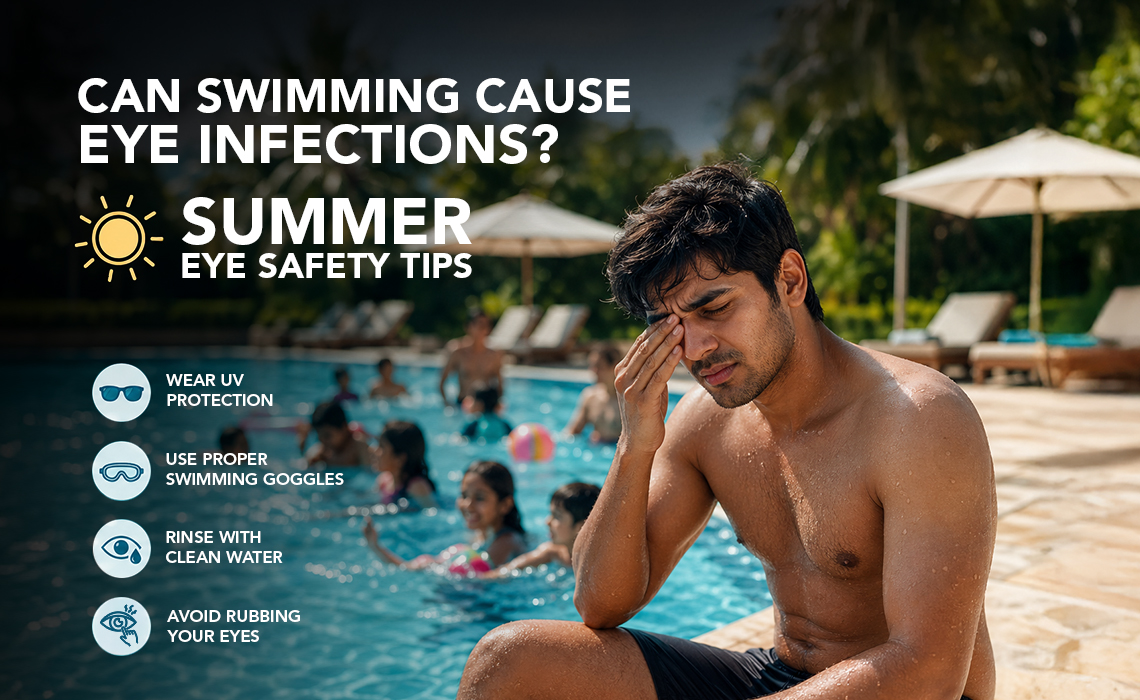
    Can Swimming Cause Eye Infections? Summer Eye Safety Tips

    There are many things one can do during the summer and swimming surely is a best bet, feeling quite refreshing and full of fun. No matter how, whether it be in a pool, lake or ocean everyone loves water at any age. But what many do not, or so rarely know about is that there are times when swimming causes eye infections if not taken care of. When it comes to irritants in water or other chemicals, the eyes can also be involved and corneal ulcers can develop. With these warnings regarding swimming hazards, and provided you have summer care instructions, everyone can look forward to a fun family swim – without sacrificing eye well-being!

    Can Swimming Really Cause Eye Infections? 

    Yes, swimming can be linked with higher chances of Eye Infections if the water hygiene is not maintained water is or no precautionary steps are taken.

    Common causes include:

    • Chlorination and chemicals in pools
    • Pathogenic bacteria and viruses from polluted water
    • Incorrect Use of Contacts When Swimming
    • Poor hygiene practices

    Well, this means even clean water can contain germs which lead to swimming pool eye infection hence you should protect your eyes where possible.

    Why Do Eyes Get Irritated After Swimming?

    Swimming can also cause discomfort for the eyes. After swimming many people may raise some irritation which can sometimes alarm them.

    Reasons for irritation:

    • Chlorine stripping natural tear film
    • Saltwater causing dryness
    • Bacteria or allergens in water
    • Prolonged exposure without eye protection

    This can cause irritation, redness, burning and sensitivity to light.

    Common Eye Infections Linked to Swimming

    1. Conjunctivitis (Pink Eye)

    It is one of the most well-known infections for both viral or bacterial conjunctivitis.

    Viral vs Bacterial Conjunctivitis:

    Viral conjunctivitis: Contagious; observably clear watery discharge and redness

    Bacterial conjunctivitis: thick discharge from eyes, often antibiotics needed in future.

    Both patterns can develop following exposure to impure water.

    1. Corneal Ulcers (Serious Condition)

    Corneal ulcer can be one of the severest complications as far as infection is concerned that may arise from swimming. This is one of the cornea defects; there is an open sore on the surface and usually gets infected by bacteria, fungus or parasite.

    Risk factors include: 

    • Swimming with contact lenses
    • Exposure to unclean water
    • Delayed treatment of eye irritation

    Symptoms of corneal ulcers:

    • Severe eye pain
    • Redness and swelling
    • Blurred vision
    • Sensitivity to light
    • Discharge from the eye

    Without treatment, this could damage their vision permanently. Corneal ulcer management is crucial immediately in order to avoid complications.

    Symptoms of Eye Infections After Swimming

    Recognizing early symptoms of Eye Infections can help you seek timely treatment.

    Common signs include:

    • Redness in the eyes
    • Burning or itching sensation
    • Excessive tearing
    • Discharge (watery or thick)
    • Blurred vision
    • Sensitivity to light

    If these symptoms continue, immediate consultation of an eye specialist near me for proper diagnosis and treatment are highly recommended.

    Summer Eye Safety Tips

    Swimming naturally puts your eyes at risk, but taking the right steps to protect them is easy.

    Essential summer eye care tips:

    • Use swimming goggles to not let water fall directly
    • Do not swim in pools that are badly managed.
    • Do not open your eyes underwater in dirty water.
    • Remove contact lenses before swimming
    • Rinse any exposure with clean water after swimming
    • Do NOT touch/rub your eyes

    Taking such steps can help mitigate the risks of swimming pool eye infection and other complications.

    What to Do If You Experience Eye Irritation? 

    If you notice eye irritation after swimming, don’t ignore it.

    Immediate steps to take:

    Flush your eyes out with purified or saline water

    Avoid rubbing your eyes

    If needed, you can use lubricating eye drops

    Give your eyes a rest that doesn’t include the screen

    Seek care right away if symptoms get worse, or do not start to get better after a day or two.

    When to See a Doctor

    Many minor irritations may get better by themselves, but some require professional help.

    Visit Your Eye Specialist If You Have:

    • Persistent redness or pain
    • Vision changes
    • Sensitivity to light
    • Thick discharge
    • Symptoms persisting for greater than 2–3 days
    • Timely intervention can avert refractory corneal ulcers and persistent damage.

    Why Prevention is Better Than Cure?

    Eye infections can have a mild discomfort to vision-threatening disease spectrum. Prevention is better than the cure, always!

    But, if you follow basic hygiene protocols and wear appropriate swimming glasses, you can be with your swimming regime without compromising the health of your eyes.

    Conclusion

    Swimming is a fun and healthy form of exercise however, it can offer health risks for your eyes. However, if eye infections are left untreated then they can be as severe as corneal ulcers.

    With the basic summer eye care tips followed, timely seeking medical help (if necessary), you can be able to save your vision easily!

    Specialized eye care centers such as Neoretina that believe in preventive care and early treatment of eye disorders are highly recommended for effective diagnosis and high-end treatment of the condition. You can enjoy a productive summer in an unspoiled environment, safeguarding the fact at the same time, if you follow all the precautions during this season.

    FAQ’s

    1.Why do my eyes turn red after swimming?

    Eye redness occurs due to chlorine, saltwater or irritation from bacteria and allergens present in the water.

    2. How long do red eyes last after swimming?

    Any mild redness should disappear over the next hour or so — however if this continues for more than 1–2 days, or you notice any blistering of the rash or legs, please contact your doctor.

    3. 3. When should I see a doctor for an eye infection?

    If symptoms such as pain, discharge or blurred vision persist, see your doctor.

    4. What are the symptoms of an eye infection after swimming?

    It may include redness, itching, burning sensation, discharge, blurred vision and photophobia.

    5. What should I do if my eyes burn after swimming?

    Rinse eyes with clean drinking water, do not rub and lubricants. If there are any symptoms then no need to wait and immediately contact a doctor because it can be dangerous.

    6. How can I protect my eyes while swimming?

    You should never wear contact lenses in water, make sure to swim with underwater goggles and if you have to get in a polluted water wash your eyes.

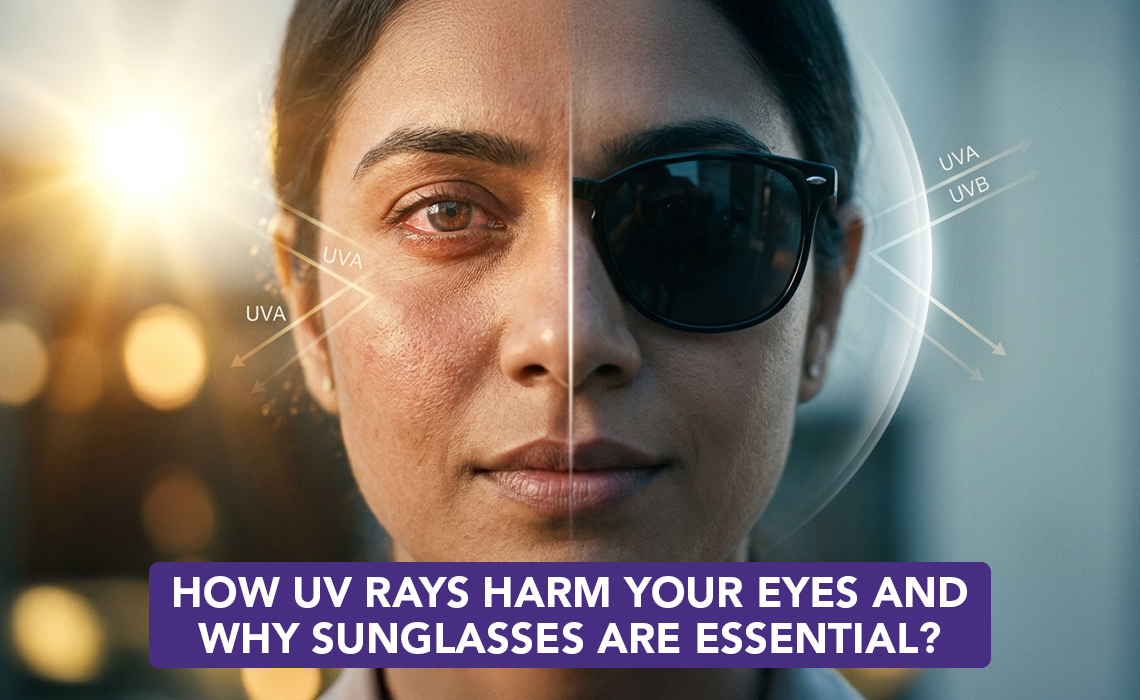
  • How UV Rays Harm Your Eyes and Why Sunglasses Are Essential?

    How UV Rays Harm Your Eyes and Why Sunglasses Are Essential?

    Eye protection from the sun is just as important as skin protection. Most people know about the damaging effects UV rays can have on skin, but not as many realise that damage to the eyes from the sun poses serious potential long-term vision problems, too. Which is precisely why sunglasses aren’t merely a fashion accessory but they are also an essential for your eye health.

    This blog will explore how UV rays can affect your eyes, how crucial UV eye protection is to your ocular wellness and also the effect on your vision of protecting your eyeballs when selecting the best pair of sunglasses.

    How Do UV Rays Damage Your Eyes?

    Therefore, the UV rays of the suns are come in your eye and can affect delicate layers like cornea, lens and retina. But UV causes short-term potential risks and chronic eye disease.

    Effects of UV exposure:

    Damage to the cornea (photokeratitis)

    Increased risk of cataracts

    Retinal damage

    Accelerated ageing of eye tissues

    The fact of the matter is that you also get exposed to UV rays on cloudy days; So all year round protecting eyes from ultra violet rays needs to become a second habit.

    Common Eye Conditions Caused by UV Exposure

    1. Photokeratitis (Sunburn of the Eye)

    Extreme UV exposure can lead to a condition that includes pain, redness and light sensitivity with blurry vision.

    1. Pterygium

    Growth on the white part of the eye caused by too much UV exposure which can affect vision if left untreated.

    1. UV Eye Damage Symptoms

    Some common signs include:

    • Eye irritation
    • Redness
    • Blurry vision
    • Excessive tearing
    • Sensitivity to light

    Detecting the above UV eye damage symptoms early enables one to avoid complications.

    Age-Related Macular Degeneration and Cataract

    Long-term exposure to uv rays is primarily linked to severe eye diseases like age-related macular degeneration (AMD) and cataract.

    Age-Related Macular Degeneration (AMD) 

    AMD damages the retina and can cause a gradual loss of central vision. UV exposure causes retinal cells to degenerate faster but increases risk for this condition.

    Cataracts 

    Cataracts develop when the lens of the eye turns opaque, leading to blurred vision. As we age, everyone gets cataracts eventually. But excessive UV ray exposure can speed up this process, meaning that they will likely appear well before the eyes reach middle age as they might have originally intended.

    Regular use of the best sunglasses for eye health is required in these types of environments.

    How Do Sunglasses Protect Your Eyes?

    Sunglasses with essential UV protection serve as a shield against rays that can be harmful.

    How they help:

    99–100% of UVA and UVB rays

    Reduce glare and improve visibility

    Safeguard the delicate membranes surrounding your eyes

    Prevent long-term sun damage to eyes

    Quality sunglasses are a shortcut to ensure that the eyes will not be exposed to UV rays during our daily lives.

    Eye Health Benefits of Wearing Sunglasses

    When it comes to eye health, choosing the best pair of sunglasses is not just a matter of comfort.

    Key benefits:

    Decreases the risk of cataracts and AMD

    Prevents eye strain and fatigue

    Shield from dirt and environmental pollutants

    Improves visual clarity in high luminance environments

    Supports overall long-term eye health

    Sunglasses and drinking water seem to be very basic advice but not only they make sure eyes healthy but also help in keeping fit eyes even in summer.

    How to Choose the Right Sunglasses?

    Not all sunglasses offer optimal protection. Select the right pair, as proper UV eye protection.

    What to look for:

    100% UV protection label

    Large lenses for better coverage

    Polarised lenses to reduce glare

    Durable and comfortable frames

    Quality over style

    Tips for selecting the best sunglasses: 

    Stay away from bottom-of-the-barrel options that lack UV certification

    Opt for wraparound styles for optimal coverage

    Make sure to fit them correctly to avoid light

    The best sunglasses for eye protection, means that your eyes will be fully protected from damaging rays.

    Conclusion

    If you lack protection from UV rays, you are more at risk of developing serious eye diseases including cataracts and age-related macular degeneration. The great news is that wearing sunglasses every day will mean you can avoid most (if not all) of this damage. While this does a lot to protect your eyes from UV rays. 

    Sunglasses selection — we all know it well in summer. You simply need a pair that will protect your eyes and study for decades. Not just a fashion statement, but also an eye shield. When you put on sunglasses that protect your eyes, they really do block some of the UV rays. That way you can bask in the sunshine without concern for ruining your tender eyeballs. 

    Since eyes are delicate, utmost care should be given to eyes which brings us to the role of eye drops. That is the reason reputed eyecare institutions like Neoretina stress preventive measures such as UV protection. If you protect your eyes today, they will serve you well tomorrow.

    FAQ’s

    1.Can UV rays actually hurt your eyes?

    Yes, exposure to ultraviolet (UV) rays for an extended period can lead to diseases like cataract, photokeratitis and retinal damage.

    2. Eyewear with UV protection is key to maintaining your eyes’ health.

    However, 100% UV-blocking sunglasses, hats and avoiding direct sunlight during the hours of 10 AM to 5 PM can help protect your eyes from this type damage.

    3. Do all sunglasses provide UV protection?

    Not all sunglasses block UV rays, no. Look for labels that say 100 percent UVA and UVB protection.

    4. Are kids glasses UV protection requisite?

    Well, yes, they are sensitive to UV rays and should wear suitable sunglasses.

    5. At what stage should I consider an eye specialist on sun-related eye problems?

    Seek an eye specialist option if redness, soreness, blurred vision, or viral vs bacterial conjunctivitis continues.


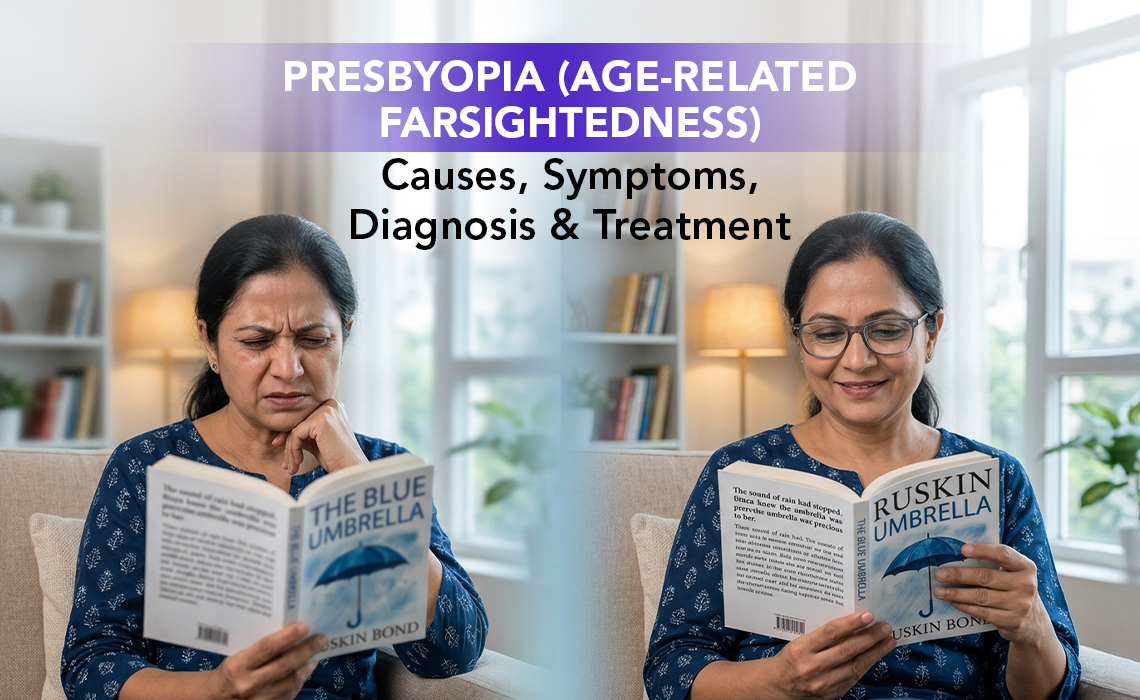
  • Presbyopia (Age-Related Farsightedness): Causes, Symptoms, Diagnosis & Treatment

    Presbyopia (Age-Related Farsightedness): Causes, Symptoms, Diagnosis & Treatment

    Presbyopia is most commonly seen and begins to develop in the 40s with ageing. Presbyopia, also known as age-related long-sightedness or far-sightedness, is the age-related gradual loss of your eyes’ ability to focus on near objects. Most people first notice this change when, after age 40, they need reading glasses to read books, their smartphones, or small print.

    (more…)

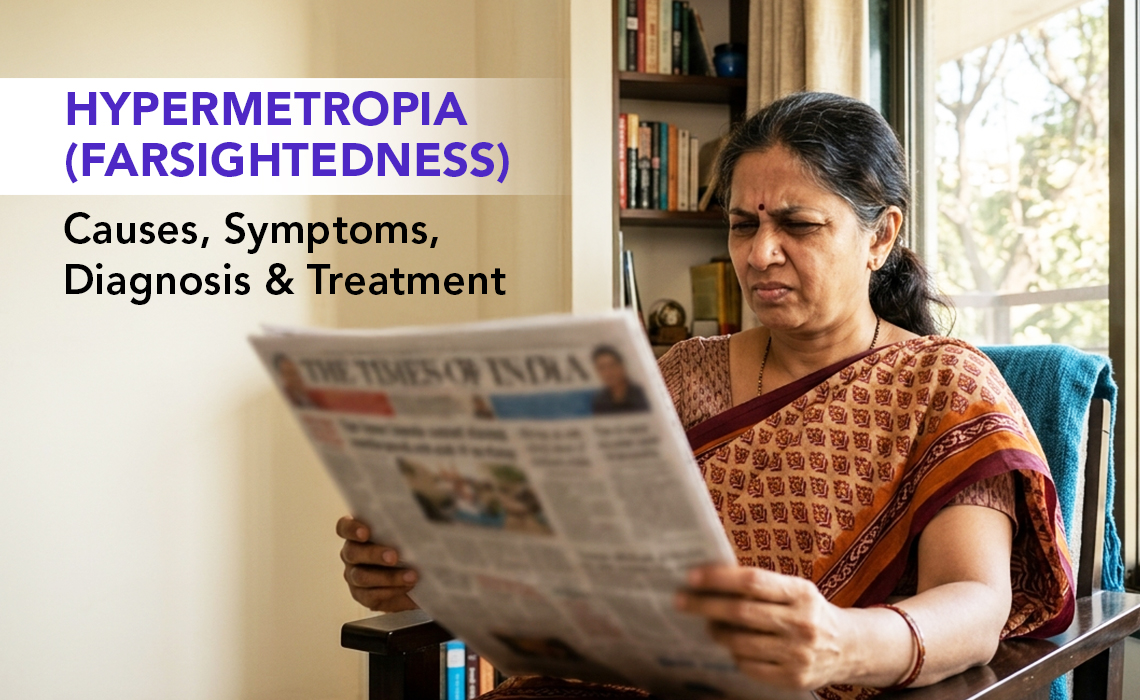
  • Hypermetropia (Farsightedness): Causes, Symptoms, Diagnosis & Treatment

    Hypermetropia (Farsightedness): Causes, Symptoms, Diagnosis & Treatment

    Sight plays an important role in our daily routine, and any problem you have with focusing can make life a lot more complicated while reading, writing, or using any digital device. Hypermetropia (farsightedness/hyperopia) is a refractive error where far-off objects can be seen clearly and near ones appear blurred.

    (more…)

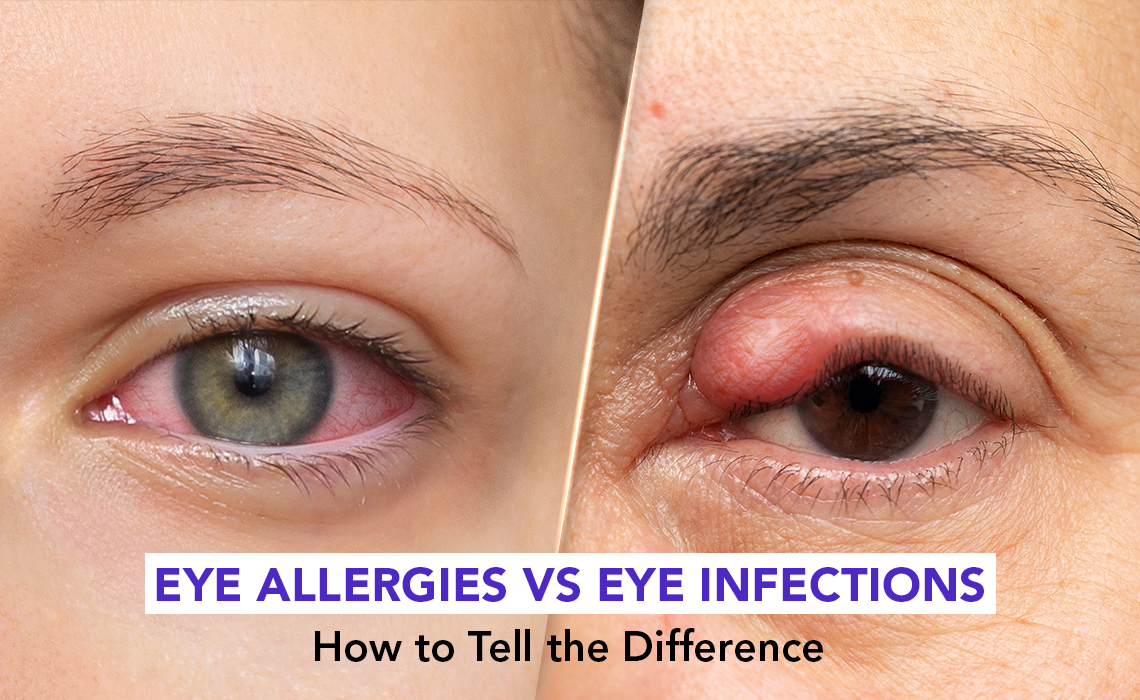
  • Eye Allergies vs Eye Infections: How to Tell the Difference

    Eye Allergies vs Eye Infections: How to Tell the Difference

    Red, itchy or watery eyes are something we all experience occasionally – in fact, most of the time it’s nothing to worry about. The symptoms of the allergic eye condition itching, redness and watering are often confused with infections. This distinction between eye allergy and eye infection is important because they have different causes, symptoms and treatments.

    (more…)

  • Night Vision Problems: Causes, Symptoms, and When to See an Eye Doctor

    Night Vision Problems: Causes, Symptoms, and When to See an Eye Doctor

    Night blindness, or difficulty seeing at night in low light, may be more than just an inconvenience: It could also be a sign of an eye condition. Problems with night vision can affect individuals of all ages and impair activities of daily living, such as driving, navigating in dimly lit environments or identifying faces after dusk. It is important to know these causes and the symptoms, as early diagnosis leads to immediate treatment.

    (more…)

  • Can Long-Term Use of Glasses Weaken Your Eyes? Myths vs Facts

    Can Long-Term Use of Glasses Weaken Your Eyes? Myths vs Facts

    If you have recently started wearing spectacles (or your prescription keeps changing), it is natural to wonder whether the long-term use of glasses can make your eyes “lazy” or worsen eye power.  This concern is one of the most common vision myths and facts topics eye doctors hear, especially from students, working professionals, and parents of children prescribed specs.​​

    (more…)
  • Why Glaucoma Is Called the Silent Thief of Sight – Early Detection Saves Vision

    Why Glaucoma Is Called the Silent Thief of Sight – Early Detection Saves Vision

    Glaucoma is referred to as the “silent thief of sight” because it can damage the optic nerve gradually while showing little to no early Glaucoma symptoms, where the vision loss can be permanent. The most reliable way to protect sight is early detection. Routine eye checks and timely treatment to slow progression can prove to be very helpful.

    (more…)